
History and culture
Labuan has been part of the Brunei Sultanate, a British coal colony, a Second World War battleground and, since 1984, a Malaysian Federal Territory. Its museums and memorials cover all four periods.
Four periods of history
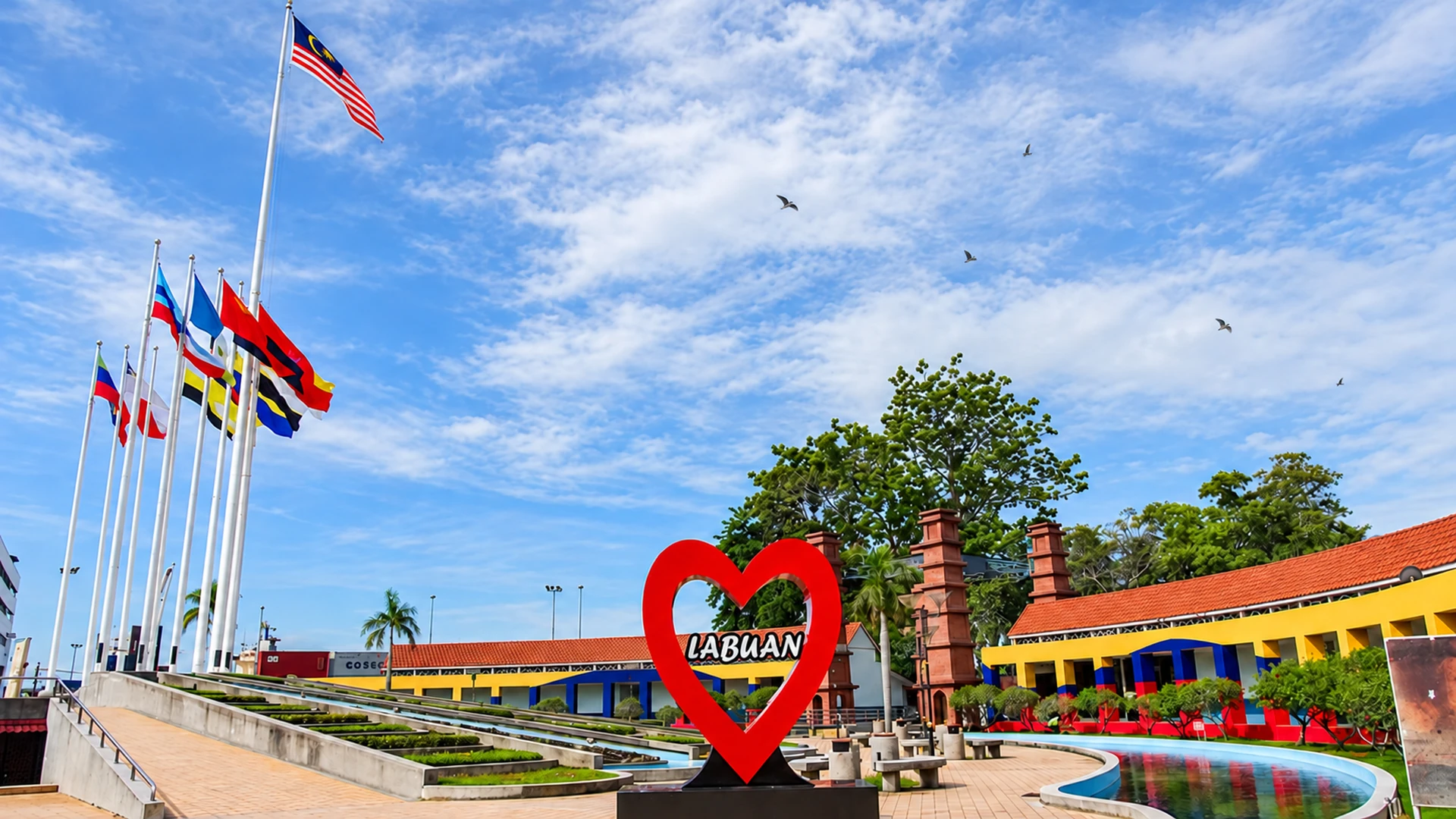
Labuan Museum, on the waterfront, sets out the sequence: the prehistoric era, the Brunei Sultanate, the British colonial period, the declaration of Independence, and the establishment of Labuan as a Federal Territory. History Square overlooks the museum.
The Second World War
The Borneo campaign formally ended on Labuan. On 10 September 1945 the 37th Japanese Southern Army surrendered to the 9th Division of the Australian Imperial Force at the site now called Surrender Point. Next to it, Peace Park was built as a memorial and a statement against war.
The communities
Labuan Museum also has displays on the main communities living on the island and their cultures and traditions. In the water villages, residents are descendants of fishermen, sailors and traders from neighbouring Brunei who settled here several generations ago.
Source: Tourism Malaysia, Labuan Map & Guide (updated December 2023).
The British Colonial Era in Labuan
The British period gave Labuan its coal industry, its botanical garden and the brick chimney at Tanjung Kubong that nobody has been able to explain.
What the period left behind
The British colonial days are one of the four chapters covered by Labuan Museum, which itself occupies a post-war colonial-style building on the waterfront.
Coal at Tanjung Kubong
The most substantial physical legacy is at Tanjung Kubong in the north, where coal was worked during the colonial period. The Chimney stands there: 106 feet of red brick imported from England, long assumed to be a ventilation stack for the coal workings, though no traces of smoke have ever been found inside it.
Sir Hugh Low’s garden
Labuan Botanical Garden on Jalan OKK Abdullah is credited to Sir Hugh Low, the British Chief Secretary of Labuan at the time. It stands in the grounds of an old Government House known locally as Bumbung 12.
Source: Museum sequence, Chimney detail and botanical garden attribution from Tourism Malaysia, Labuan Map & Guide (updated December 2023).
How the period ended
The colonial era gave way to the declaration of Independence, and Labuan later became a Federal Territory on 16 April 1984. See the history of Labuan for the full sequence.
| Coal | Worked at Tanjung Kubong |
|---|---|
| Left behind | The Chimney, the botanical garden, colonial-era buildings |
| Garden credited to | Sir Hugh Low |
Brunei Sultanate Influence on Labuan
Labuan was part of the Brunei Sultanate before it became a British colony. That connection is still visible in the water villages and in the island’s food.
The Sultanate period
The Brunei Sultanate is one of the four periods set out in the displays at Labuan Museum, which run from the prehistoric era through the Sultanate, the British colonial days, the declaration of Independence, and the establishment of Labuan as a Federal Territory.
Where you can still see it
The clearest survival is in the water villages. The residents of Kampung Patau-Patau 2 are descendants of fisherfolk, sailors and traders from neighbouring Brunei who settled on Labuan many generations ago, and the village still stands as stilt houses linked by boardwalks.
The second is on the table. Ambuyat is a Bruneian sago dish, and three of Labuan’s four local sweets, lamban, punjung and jelurut, belong to the same Brunei-Malay tradition.
Source: Museum sequence and water village ancestry from Tourism Malaysia, Labuan Map & Guide (updated December 2023).
The connection today
Brunei Darussalam remains Labuan’s nearest international neighbour and one of its ferry connections. Many visitors combine the two.
| Period | Before the British colonial era |
|---|---|
| Visible in | The water villages, and in local food |
| Today | Brunei is Labuan’s nearest international neighbour |
Coal Mining Heritage in Labuan
Coal was worked at Tanjung Kubong in the north of the island during the colonial period. The workings are the reason the Chimney was built, and the reason nobody can explain it.
Where the coal was
The coal workings were at Tanjung Kubong, at the northern end of Labuan, roughly the same part of the island as Labuan Bird Park, about 16 km from the town centre.
The Chimney
The Chimney is the surviving structure. It stands 106 feet high, built from thousands of red bricks imported from England, with an estimated 23,000 bricks used to restore its outer walls. It was originally believed to be a ventilation stack for the coal workings, but no traces of smoke have been found inside it, so its purpose has never been established.
Source: Chimney dimensions, material and the absence of smoke traces from Tourism Malaysia, Labuan Map & Guide (updated December 2023).
The tunnels
Two related sites sit nearby: the Tanjung Kubong tunnel and coal shaft, and Lubang Gantang, another shaft from the mining period.
Old mine workings can be unstable, and access arrangements change. Check on the ground before entering any shaft or tunnel, and do not go into one that is not an open, maintained visitor site.
Why it matters to the island’s story
Coal is why the British wanted Labuan in the first place, which makes Tanjung Kubong the origin point for the whole colonial period here.
| Location | Tanjung Kubong, northern Labuan |
|---|---|
| Period | British colonial era |
| Survives | The Chimney, tunnel and shaft sites |
| Distance | The northern tip is about 16 km from the town centre |
The Second World War Borneo Campaign in Labuan
Labuan is where the Borneo campaign formally ended. The Japanese 37th Southern Army surrendered here on 10 September 1945, and 3,908 war dead are buried on the island.
How the campaign ended here
On 10 September 1945 the 37th Japanese Southern Army surrendered to the 9th Division of the Australian Imperial Force at the site now known as Surrender Point. That surrender marked the end of the Second World War in Borneo.
What remains on the island
Three sites carry the story, and they are close enough together to see in one afternoon.
- Labuan War Cemetery. The largest war memorial in Malaysia and the burial place of 3,908 war dead from Australia, Britain, New Zealand and Malaya.
- Surrender Point. The place the surrender was signed, overlooking the South China Sea.
- Peace Park. Built next to Surrender Point as a memorial and a statement against war. A bronze plaque at the entrance commemorates the surrender.
Source: Surrender date, units involved and burial figure from Tourism Malaysia, Labuan Map & Guide (updated December 2023).
Remembrance Day
A ceremony is held at the war cemetery each year in full military tradition, on 11 November or the Sunday closest to it. It is the single largest gathering on the island connected to the war.
Visiting these sites
The cemetery is an active burial ground, not a monument. Dress appropriately, keep noise down, and stay on the paths between the rows.
Reading the wider picture
Labuan Museum sets the war years inside the island’s longer sequence, from the Brunei Sultanate through the British colonial period to Federal Territory status.
| Surrender date | 10 September 1945 |
|---|---|
| Surrendered | 37th Japanese Southern Army |
| Accepted by | 9th Division, Australian Imperial Force |
| War graves | 3,908 |
| Ceremony | Remembrance Day, 11 November or the nearest Sunday |